
Black and White Magic Day 8
Hi and welcome to Day 8 of our Black and White Magic online class.
Yesterday we looked at Dodging and Burning and using Curves and Levels to enhance your photographs in post processing. Today we are going to review how to tone your images and how to add vignettes. Vignettes can be a powerful addition to your post processing workflow as they help direct the viewer’s eye through your photograph to the focal point. Vignettes can be dark or light.
During the video demonstrations I will also be putting to use some of the other tools we have been using and show you how I start to tweak my images from start to finish.
Please note: Elements Users, you will need to use Levels Adjustment layers instead of Curves. Also, the Split Toning Effect in ACR is only available to Photoshop or Lightroom Users.
A LINK TO YOUR PROJECT FILES IS HERE
.png)
TECH TALK – LENSES
So we have talked about all sorts of things to do with your camera and taking pictures, but we have not talked about the GLASS that is front and center of the equation…. Clearly a key element in taking pictures…. so lets explore, and please, grab a coffee and DON”T let your eyes glaze over… this is important….
Lenses don’t have fun names, but rather are labeled like this: 18-55mm f/3.5-5.6. That designation tells you a lot, but doesn’t mean much if you don’t know a few terms. In this section we’ll learn what you need to know to understand how lenses are labeled and what those labels mean.
Firstly though it’s important to know the difference between zoom lenses and prime lenses.
A zoom lens, say 24mm – 105mm does what you might expect: it zooms in and out, allowing you to magnify your subject or pull it closer.
A prime lens, eg. 85mm can’t zoom.
If you want to move closer or farther away with a prime lens, you move your legs rather than turning a zoom ring on the barrel (i.e. the body) of the lens.
Why would anyone prefer a prime to a zoom? Primes are often cheaper, offer sharper results, have wider apertures (which means they can take in more light, thus performing better in low light situations), and generally handle their specific function better than a zoom.
Zooms allow you to essentially change the lens all in one, and therefore the type of shot you’re getting, by zooming in or out. Primes do not.
Both zoom and prime lenses are designated by their focal length. Focal length is often measured in millimeters (mm) and specifies the distance at which something is in focus. This definition doesn’t mean much practically speaking, so what you want to remember about focal distance is that lower numbers indicate a wider view (zoomed out) and larger numbers indicate a closer view (zoomed in).
For example, if you’re photographing a small room in a house and you used an 18mm lens you’d likely capture the majority of the room in your image and you’d get very little of the room with an 85mm lens.
Primes only have one focal length, and so they’re simply labeled as 35mm, 50mm, and so on.
Zooms offer a range, and so they’re labeled as 70-300, indicating that you can achieve a focal length as wide as 70mm, as close as 300mm, and everything in between
Lens titles have two measurements. The first is focal length, as we just discussed, and the second is aperture. Aperture determines how much light your lens can let in. When a lens has a wide aperture, designated by a small number called an f-stop (e.g. f/1.8), it captures more light. When a lens has a narrow aperture, designated by a larger number (e.g. f/5.6), it captures less.
Wide apertures allow you to take photos when less light is available because the lens can see more of the light.
Wider aperture lenses are typically a LOT more expensive.
ARE YOU YAWNING YET?…. best not……
Types of Lenses
Lenses have various designations based on their focal length. Generally speaking, a lens with a very wide field of view eg. 8mm exaggerates depth and one with a narrow field of view eg. 200mm flattens depth.
Changing focal lengths, whether that’s by using a zoom lens or changing between different primes, allows you to achieve different affects with your photos.
Note: Each lens category will contain a range of focal lengths (e.g. 50-100mm). If you own a standard DSLR camera, it likely has an APS-C sensor inside – or what is commonly know as a crop frame camera. . APS-C sensors magnify focal lengths by approximately 1.6 times. That means a 50mm lens essentially becomes an 80mm lens (as 50 x 1.6 = 80). This is important because this magnification can, potentially, make a lens in one category into a lens in another category. Bear this in mind when shopping, unless you know your camera has a full-frame (35mm equivalent) sensor and the 1.6x magnification doesn’t apply.
In other words with my Canon 5D MKiii, what I see is what I get. If I shoot with my Canon 7D, same lens, I will see 1.6 more with the same lens as it is a Crop Frame camera.
Let’s look at the common categories of lenses and what you can do with them.
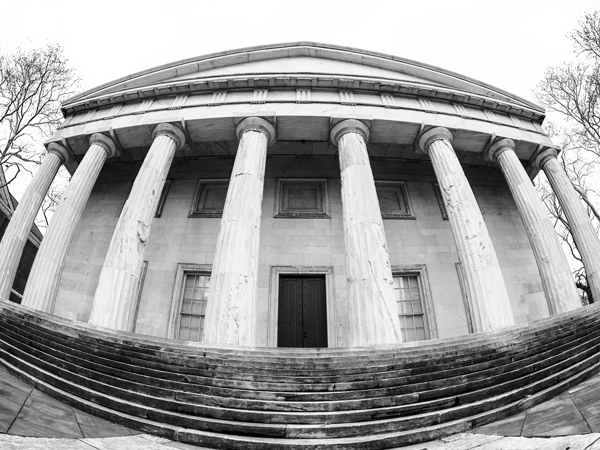
Fisheye lenses – 12mm or less, are the widest lenses you can buy. As pictured above, sometimes they’re so wide that your image looks almost circular. Fisheye lenses are used when you need to photograph absolutely everything possible in the frame or you want the look of extremely exaggerated depth.
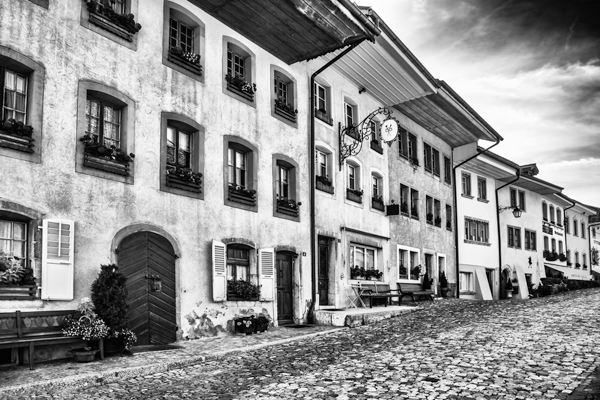
Wide angle lenses – 12mm – 24mm or 17mm – 40mm create exaggerated depth just like fisheyes do, but to a lesser extent. When you want to capture a lot in your photo, you need to go wide. Very useful for landscape photography or architecture.
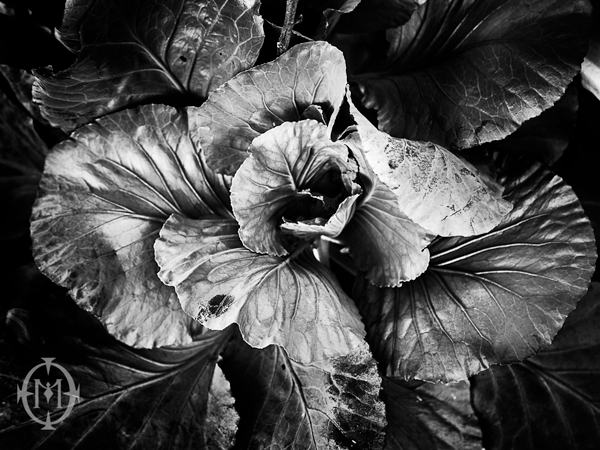
Standard lenses 35mm – 85mm (above) mirror what the human eye sees most closely. If you want your photos to look natural, standard is the way to go. A 50mm lens is generally considered to be the closest to what the human eye sees, although some will argue a 35mm is closer. Regardless, both produce beautiful, natural-looking photographs. Additionally, 35mm, 50mm, and 85mm are common focal lengths for inexpensive prime lenses (especially 50mm).

Telephoto 100-300mm – When you need to get closer but can’t, you pick up a telephoto lens. While you have the great advantage of getting closer to your subject without physically moving, telephoto lenses flatten depth to the point where it may look a little unrealistic.
Super Telephoto (300mm or more) – Super telephoto lenses can shoot the moon…… when you want to photograph something that is really far off, this is the type of lens you need. These planes were shot at 300mm.
Special Types of Lenses– some lenses offer additional features on top of their focal length that can create interesting effects. Macro lenses allow you to focus on an object that’s incredibly close—often times closer than the human eye can see. Tilt-shift lenses selectively focus on an area of the image and create a miniaturization effect. These two types are the most popular, but you’ll find more if you start exploring.
For example, Lensbaby, as shot above, offers its own brand of selective focus lenses that can create blur in parts of the image that a standard lens cannot achieve and are super fun to play with.
.png)
SHOOTING ASSIGNMENT #8
If you have only one lens, that is fine, but try taking photos of the same subject and changing the focal length, ie. shoot one image at 55mm and another of the same thing at 200mm for example.
If you have more than one lens then try changing them out and photographing your same subject similarly.
Show me your EXIF data, ie camera settings and focal range.
Use this exercise to help you understand what focal range and lens capabilities mean.
Have fun, and as always, enjoy your camera!!
Marie